Lord President highlights challenges facing justice system
29 Sep
SPEAKING at Parliament House at the Opening of the Legal Year this week the Lord President warned that Scotland's courts were facing significant pressure from rising numbers of serious criminal cases, describing current demand as "unprecedented" and adding that further reform was now essential.
Referring to the increase in High Court business, he said: “In 2024, the Crown typically lodged less than 100 indictments a month. That is, less than 100 cases of serious criminal offending brought to the High Court each month. That figure has grown to an average of over 150 a month today. By the Crown's own estimates, it is expected to reach over 200 per month in the course of this legal year. In other words, there will soon be more than twice as many serious criminal cases coming to the High Court each month than just two years ago.”
While highlighting that steps were already being taken to increase capacity and improve processes, he argued that further reform was now essential. There was a need for a more joined-up approach across the criminal justice system, he said, stating that “only by working together as a single system can its individual parts continue to function effectively in the face of unprecedented demand."
Discussing the proposed Sexual Offences Court he said it had the potential to change radically the way in which the justice system addressed violence against women and girls. Still, it needed to be implemented and resourced properly if it was to achieve its promise in supporting victims in a trauma-informed way.
Technology and artificial intelligence formed another key strand of his speech. While recognising the opportunities presented by AI, the Lord President stressed that it should support, rather than replace, judicial decision-making. "From a judicial perspective, generative AI assistants will be considered as a tool to support judicial work, not as a substitute for it. Decision-making rightly remains solely the work of judges, " he said.
He warned of the risks associated with uncritical use of AI-generated material in legal proceedings, noting that courts have already encountered references to non-existent cases and legislation.
On regulation, the Lord President described the Regulation of Legal Services (Scotland) Act 2025 as a major development for the profession and welcomed progress towards implementation of the new framework. He also welcomed the Faculty of Advocates’ recent consultation on its disciplinary rules, stating that: "Publicly consulting on disciplinary rules is a strength and demonstrates the Scottish Bar is confident, transparent and outward-looking. A modern set of disciplinary rules is a prerequisite for a growing Bar and will ensure standards and public confidence are upheld.”
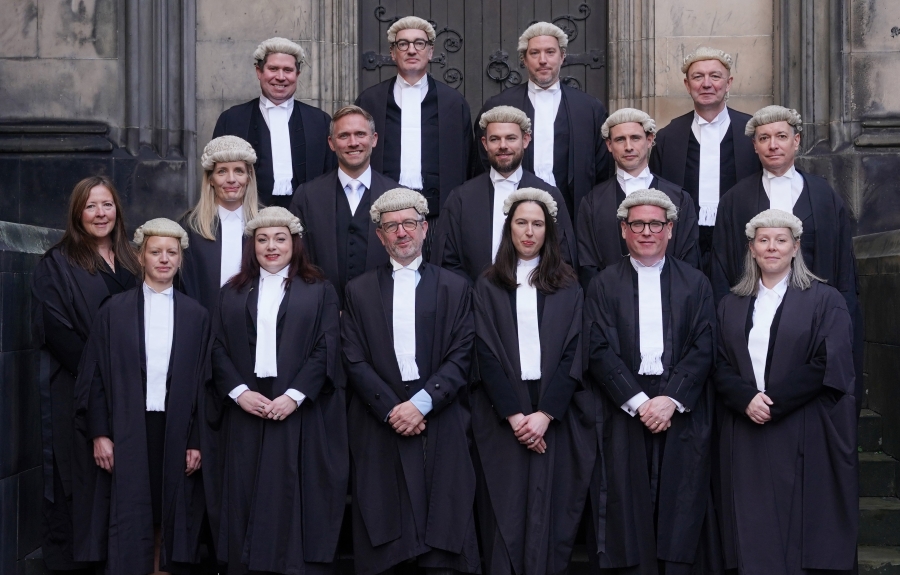
In his concluding remarks he welcomed the appointments of the latest Senators of the College of Justice and congratulated the new Honorary King's Counsel and King's Counsel.
The new King’s Counsel appointees are Advocates Ross Anderson, Jonathan Broome, Ewen Campbell, Wendy Culross, Gregory Farrell, Nicola Gilchrist, Paul Harvey, Lesley Irvine, Kenneth McGuire, Lynsey Rodger, Barnabas Ross, Elisabeth Roxburgh, Michael Upton, Timothy Young, and Solicitor Advocates Graeme Brown and Leanne Cross.
The new Honorary King’s Counsel appointees are Sheriff Douglas Allan Brown, Professor Pamela Ruth Ferguson, and Professor Fiona Leverick FRSE.
The full text of the Lord President's speech can be found here.